







Search Results for: cold brew pot
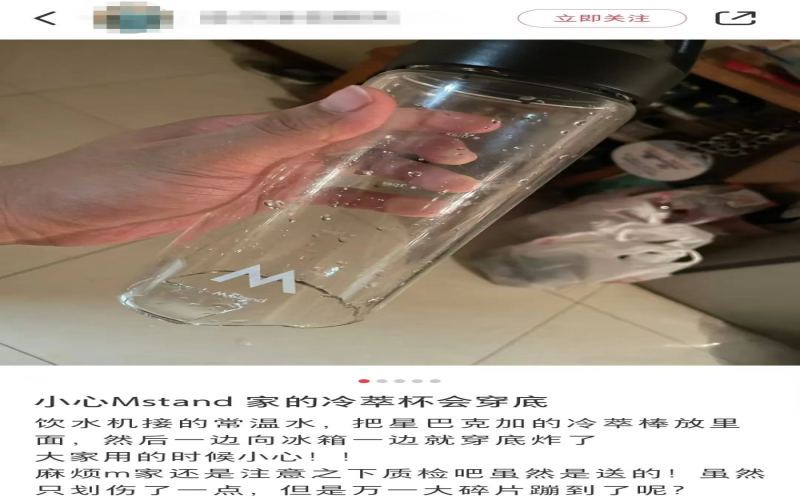
Mstand Cold Brew Carafes Frequently Crack, Fan Merchandise Quality Control Questioned by Fans
In the scorching summer, iced coffee has become a favorite for many coffee enthusiasts, and making cold brew at home is a recent popular choice. Mstand, known for its peripheral marketing, launched a cold brew set in early July, including cold brew coffee bags and a glass cold brew pot, quickly attracting a large number of fans to purchase. However, recently, multiple consumers have reported serious quality issues with this cold brew pot—some had the bottom suddenly shatter and got cut by fragments while using it, and more encountered unexplained cracks at the bottle mouth joint. Although the product is labeled as ordinary glass not resistant to high temperatures, users who reported the issues all stated they did not use hot water and operated carefully. This is not the first time Mstand's peripherals have failed; the previously launched woven bag was also criticized for its easily broken handle. While the strategy of using high-appeal freebies to drive set sales is effective, frequent quality control issues are eroding fan trust. [more…]
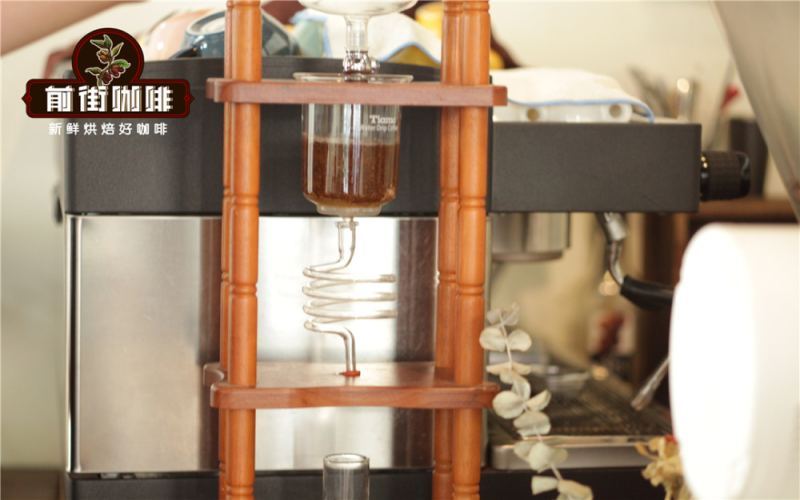
How to drink cold brew coffee for maximum flavor? A detailed explanation of the underlying fermentation principles and three Front Street concentrate recipes.
Cold brew coffee is a method of extracting coffee with ice water at low temperatures, completely different from regular pour-over. It originated from the invention of the Dutch on the island of Java in the 17th century, using condensed water pressure to drip through coffee grounds one drop at a time, taking up to 8 hours. Cold brew coffee has a unique flavor and needs to be refrigerated and fermented after extraction, reaching its best state on days 3 to 7, with a complex aroma reminiscent of fermented rice wine. This article explains in detail the steps for making cold brew coffee, key points for fermentation and storage, and shares three cold brew recipes commonly used by Front Street Coffee—dark berry type, light and clean type, and sweet and delicious type—to help you easily make a delicious cold brew suitable for summer. [more…]
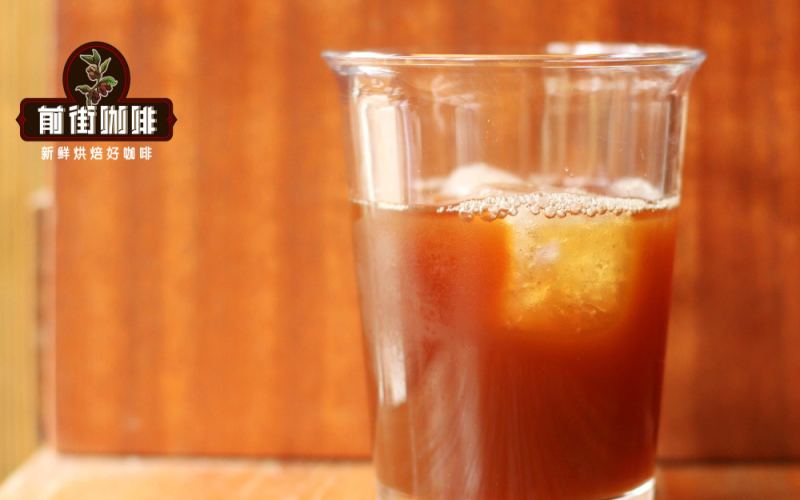
The extraction principle and operating process of cold brew coffee, along with Front Street Coffee bean recommendations suitable for making it.
Cold brew coffee is a popular iced coffee in summer, also known as Dutch drip coffee or water drip coffee. It relies on ice water dripping through the coffee grounds one drop at a time, undergoing low-temperature extraction over several hours to slowly dissolve the aromatic substances in the coffee. This brewing method requires controlling the drip rate, typically 40–50 drops per minute, and extracting 1000ml takes about 5 to 8 hours. The finished cold brew coffee tastes even better after refrigerated storage, with days 3 to 7 often regarded as the optimal drinking period. As for which beans to choose, it is recommended to prioritize light to medium roast single-origins with pronounced fruity notes and prominent aromas. In addition to outlining the principles of cold brew preparation and six operational steps, this article will also introduce four Front Street Coffee beans suitable for cold brew, including Front Street Huakui, Front Street Kenya Little Tomato, Front Street Sidra, and Front Street Butterfly, for coffee enthusiasts' reference. [more…]
Iced Coffee Brewing Methods | How long does it take to make cold drip coffee? What are the taste and flavor characteristics of cold drip coffee? What is the extraction principle of cold drip coffee?
There are many ways to brew coffee, and cold drip is one of them. Cold drip coffee is also a type of iced coffee, and in summer, iced coffee is even more of a favorite among coffee lovers. Cold drip coffee is naturally not brewed with hot water, but with low-temperature water, which is different from our usual pour-over coffee. [more…]
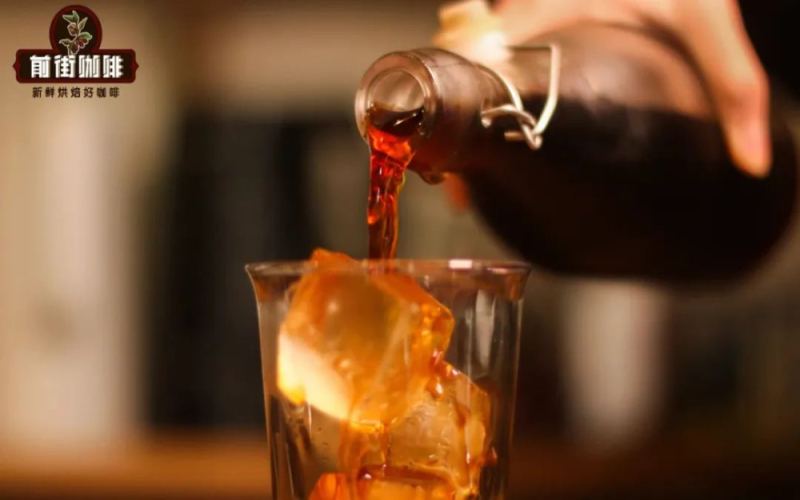
Making Cold Drip Coffee Without a Cold Drip Brewer: A Complete Guide to Choosing the Right Dose for Your Filter and Building a Simple DIY Cold Drip Setup
Want to enjoy a refreshing glass of cold brew coffee but don't want to buy an expensive cold drip tower just for that? In fact, you can rig up a simple cold drip setup using the coffee gear you already have on hand. This article starts from Front Street's hands-on experience, breaks down the structural principles of a cold drip tower, shows how to replace the original equipment with a V60 dripper, a flat-bottom dripper, and a server, and explains in detail every step of the process: distributing the grounds, pouring water, adding ice, and cold-brewing in the fridge. It also covers how the size of the dripper affects your choice of coffee dose, and the key role that ice cube size plays in the extraction, so you can easily make a full-flavored cold brew coffee at home. [more…]
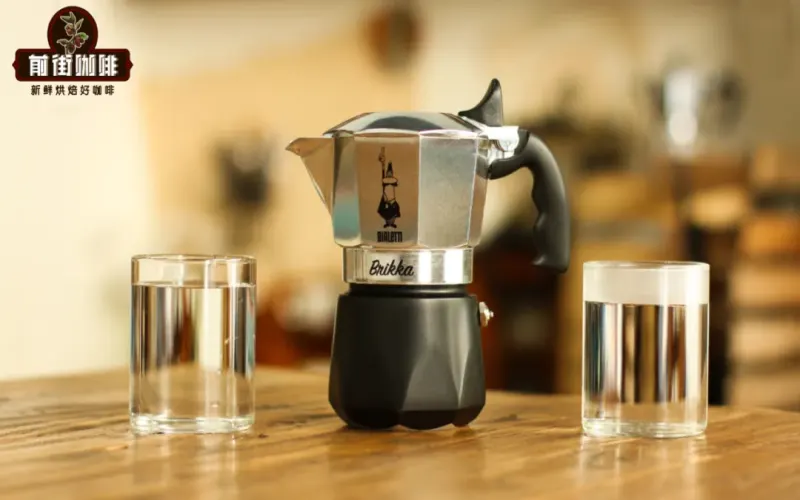
Moka pot: cold water or hot water? A hands-on comparison of heating time, sputtering, and bitterness differences
The Moka pot, with its compact size, simplicity, and affordability, has become the go-to home brewing device for many coffee enthusiasts. But in actual use, one repeatedly raised question has always puzzled people: when making Moka pot coffee, should you use cold water or hot water? The choice of water temperature not only affects the length of heating time, but also directly influences the final coffee flavor. Front Street conducted a controlled experiment, using cold water and hot water respectively to brew Moka pot coffee, recording the two's outflow time, extraction state, and taste presentation. This article will present the complete experimental process and results, analyze the causes of the sputtering phenomenon, and explain why Moka pot coffee made with cold water is more prone to bitterness, finally offering targeted operating recommendations. [more…]
The Complete Guide to Cold Brew Coffee: Low-Temperature Extraction Principles, Brewing Steps, and Three Classic Front Street Coffee Recipes
Cold brew coffee is a brewing method that uses cold water for low-temperature extraction over a long period of time, producing a full, smooth, non-astringent and rounded cup with lower caffeine content than other brewing methods. Its history can be traced back to the Dutch invention on the island of Java in 1699, and today it has become a highly sought-after drink among coffee lovers in summer. This article will systematically introduce the origin of cold brew coffee, the extraction principle, the differences from pour-over coffee, detailed preparation steps and key points for controlling the drip rate, and share three cold brew recipes often used by Front Street Coffee — the dark berry type, the clean and crisp type, and the sweet and pleasant type — while also explaining the best drinking period and storage recommendations for cold brew coffee. [more…]
Why Is Iced Drip Coffee Called Dutch Coffee? A Full Breakdown from Origin Legends to Cold Brew Differences and Brewing Practice
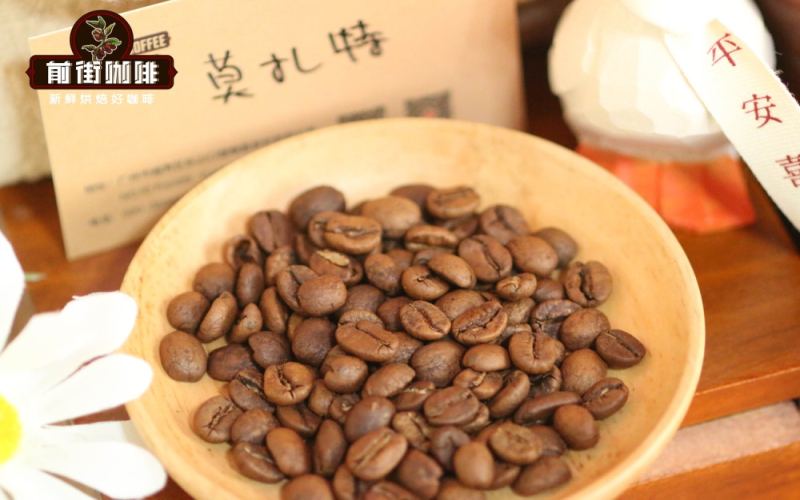
Ice drip coffee is often called Dutch Coffee. The origin story widely circulated was actually fabricated by Japanese coffee practitioners to promote ice drip pots. The mainstream method in Europe and America is not drip-based, but immersion-based cold brew. Ice drip coffee is made by dripping ice water evenly through coffee grounds, a slow extraction at low temperature and normal pressure, giving it a rich yet not bitter taste. Ice-brewed coffee and ice drip coffee both fall within the category of Dutch coffee. This article focuses on the key operational points of ice drip pots—their structure, coffee-to-water ratio, grind size, drip rate control, and refrigerated fermentation—and, drawing on beans such as Front Street Mozart, Sidra, Gutingding, Butterfly, and PWN Golden Mandheling, explains how different flavor-type coffee beans perform in ice drip and how to approach blending them. [more…]
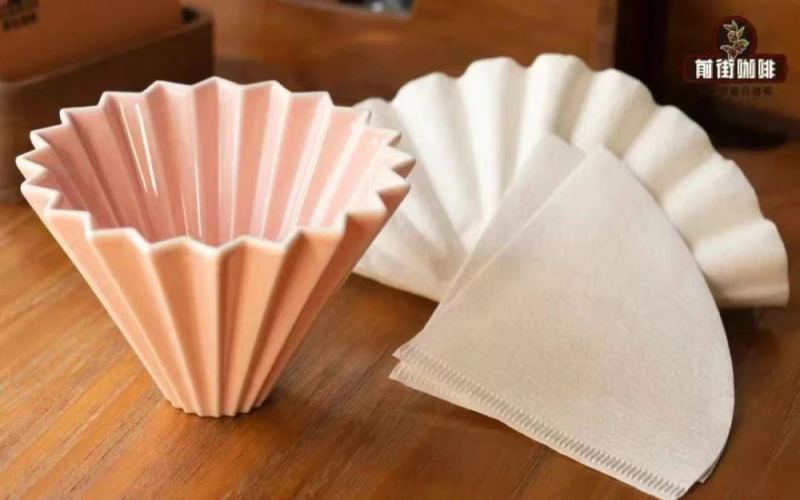
The Diverse Uses of Filter Paper in Coffee Brewing: An Analysis of Filtration Needs for Cold Brew, Ice Drip, Espresso, and Moka Pot
Can filter paper only be used for pour-over? In fact, in cold brew, ice drip, espresso, and even moka pot brewing, filter paper also plays an important role, just with different functions emphasized. This article compiles the practical experience of Front Street Coffee and explains one by one the specific uses of filter paper in different extraction methods: why cold brew needs secondary filtration, what roles the upper and lower filter papers in an ice drip brewer each play, what changes adding filter paper above the puck or at the bottom of the portafilter basket brings to espresso, whether a moka pot should use filter paper, and the correct approach to using filter paper to filter coffee grounds. Whether you are just starting out or want to refine your technique, you can find practical reference solutions here. [more…]
How to Choose the Roast Level for Cold Brew Coffee Beans? A Full Guide to Grind Ratio, Extraction Time, and Simplified Home Methods
Although cold brew coffee is not common in everyday home brewing, its clean taste and rich fermented aroma have made it unforgettable to many coffee lovers. Making cold brew coffee requires a dedicated cold brew pot and takes a long time, which is also why it remains relatively niche. However, the core of a cold brew pot is actually just the flow restriction valve—as long as you can control the dripping speed of the ice water, you can make cold brew coffee at home even with an ordinary dripper. This article will cover the choice of roast level for cold brew coffee beans, grinding and coffee-to-water ratio, extraction time, and a simplified method that does not require a professional cold brew pot. It also includes Front Street Coffee's bean list recommendations and practical parameters for friends who want to try cold brew at home. [more…]
What's the difference between ice drip coffee and cold brew coffee? A comprehensive comparison from brewing principles to flavor expression
Ice drip coffee and cold brew coffee are two common cold coffee methods, and many coffee enthusiasts discuss the taste differences between them when drinking coffee at Front Street. This article, through actual experiments, uses the same Front Street sun-dried Huakui coffee beans and employs both ice drip and cold brew methods to make coffee, conducting a comprehensive comparison from production time, equipment, coffee-to-water ratio, extraction scheme to the final flavor performance. Ice drip coffee is clear and bright, with a clean and refreshing taste, carrying fermentation notes and a vinous charm; cold brew coffee, on the other hand, has a full body, obvious fruity sweetness, and a uniform flavor. Through this experiment, the significant difference between the two in terms of a clean and refreshing taste can be clearly identified. [more…]

Should Cold Brew Coffee Include a Bloom? Experimental Comparison and Principle Analysis of Cold Immersion vs. Hot Water Pre-infusion
Cold brew coffee has always been made by steeping at low temperatures throughout, but if you first bloom the coffee grounds with hot water before steeping, will the final product taste better? Front Street conducted a controlled experiment using Sidamo Huakui 8.0: aside from the water temperature treatment, the two pots of cold brew had completely identical parameters—one was mixed directly with room-temperature water and refrigerated, while the other was first bloomed with 92°C hot water for 30 seconds before room-temperature water was added. After 8 hours, filtering and tasting revealed that the two had similar flavor directions, but the bloomed version had a higher concentration. The article then explains that the real source of this difference is not the blooming action itself, but the hot water and parameter changes introduced to accomplish the blooming, and, combined with the principle of degassing during blooming in pour-over brewing, explains its applicability in the cold brew scenario. [more…]
Types of Black Coffee | Is There a Big Difference in Flavor and Mouthfeel Between Ice-Drip Coffee and Cold Brew Coffee? Are the Extraction Principles of Ice-Drip and Cold Brew the Same?
For more specialty coffee knowledge, please follow: Front Street Coffee (Frontsteet Coffee). Many customers who come to Front Street to drink coffee discuss whether there is a difference in taste between ice drip coffee and cold brew coffee. Both are common methods of making cold coffee. Today, Front Street will conduct an experiment on these two [more…]
A Guide to Choosing Beans for Cold Brew Coffee: A Comprehensive Analysis from Equipment Usage to Four Flavor Profiles of Bean Lists
Cold brew coffee, through its low-temperature slow extraction method, presents a rich yet non-bitter unique taste, and has gained increasing favor among coffee enthusiasts in recent years. But exactly what beans should be used to make cold brew? And how should the equipment be operated correctly? Front Street Coffee, drawing on its store practice experience, starts with the four-part structure of the cold brew pot and shares in detail key parameters such as grind size, coffee-to-water ratio, and drip flow rate, and according to four major categories—tropical fruit fermented type, refreshing clean type, sweet and delicious type, and flavor blend type—recommends a list of coffee beans suitable for cold brew one by one, helping everyone find their own cup of refreshment in the hot summer. [more…]
The definition of black coffee and its connection to Americano—do pour-over, siphon, cold brew, and moka pot all count? Also discussing the differences between moka pot and espresso machine
In short videos, you often see bloggers holding a cup of deep-colored coffee and calling it "black coffee," which leads many friends new to coffee to ask: Is black coffee the same as Americano? What exactly is the difference between the two? In fact, black coffee is a broad umbrella term—as long as the cup contains nothing besides coffee substances and plain water, it can be classified under this system. Starting from the definition, this article sorts through common black coffee members such as Americano, pour-over, siphon, cold brew, and moka pot, explains their respective extraction characteristics, and also compares the similarities and differences between moka pots and espresso machines in pressure extraction. Finally, it offers bean selection directions suitable for beginners, including several recommendations from the Front Street series. [more…]
Ice Drip vs. Cold Brew: A Comprehensive Comparative Experiment from Brewing Principles to Flavor Expression
Ice drip coffee and cold brew coffee are two common methods of making cold coffee, and the two differ noticeably in production process, extraction time, and final flavor. Front Street Coffee conducted a synchronized experiment using the same sun-dried Huakui coffee beans, comparing the production methods and resulting performance of ice drip and cold brew in an all-round way, from grind size calibration to powder-to-liquid ratio setting, and then to extraction time and post-processing methods. The experimental results showed that ice drip coffee was clear and bright, with a clean and refreshing mouthfeel, carrying fermented notes and a faint berry-like sweet acidity; cold brew coffee, by contrast, had a full-bodied mouthfeel and uniform flavor, with prominent fruity sweetness and a weaker fermented note. This article will analyze in detail the differences in production methods between the two types of cold coffee, the experimental plan, and the flavor comparison results, to help coffee enthusiasts more clearly understand the characteristics of both and the basis for choosing between them. [more…]
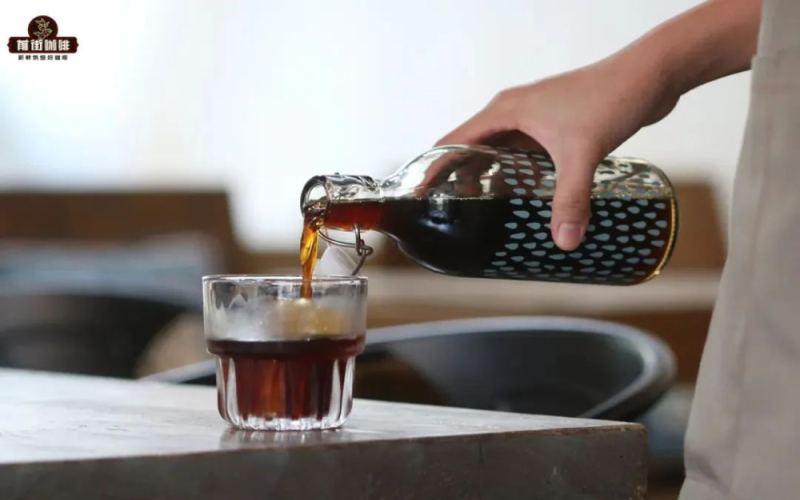
What Causes the Oil Film on Cold Brew Coffee? A Detailed Explanation of Low-Temperature Extraction Principles and Filtration Techniques
Cold brew coffee, with its advantages of simple operation and low cost, has become the preferred way for many coffee enthusiasts to make iced drinks at home. However, many people find in practice that a layer of oil slick unexpectedly floats on the surface of a finished pot of cold brew, and they can't help worrying that the coffee has gone bad or the container was not cleaned properly. Where exactly does this layer of oil come from? In fact, its cause is completely different from that of the Crema on the surface of espresso. This article will focus on the low-temperature extraction principle of cold brew, explain the phenomenon of oil condensation, and share the complete operational details from filter selection to secondary filtration, helping you make a cup of cold brew coffee with a clear mouthfeel and full flavor. [more…]
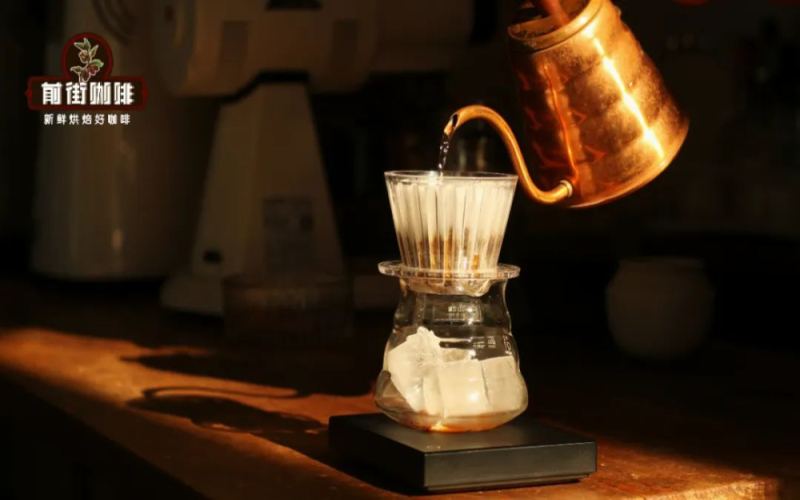
What's the difference between cold brew, ice drip, and iced Americano? From principles to preparation, understand all three types of iced coffee at once
Iced coffee is not just one method. Depending on the extraction temperature, iced coffee on the market can be broadly divided into two categories: one is brewed with hot water and then cooled with ice, with iced Americano being the most typical example; the other involves low-temperature or room-temperature water directly contacting the coffee grounds, allowing the flavors to release slowly, with cold brew and ice drip both belonging to this camp. Although both are low-temperature extractions, they differ considerably in equipment, process, and final taste. This article will start from the extraction principles, outline the home preparation steps for cold brew coffee, explain the structure and output logic of the ice drip pot, and explain why the ice drip made from the same beans is often cleaner than cold brew. Friends who like floral and fruity notes can also refer to several Front Street Coffee bean recommendations suitable for making iced coffee. [more…]
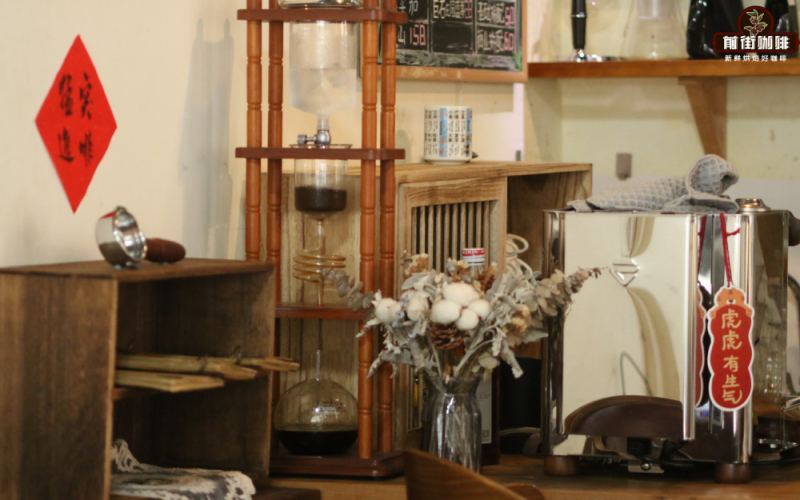
Cold Brew Coffee Bean Selection Guide: A Full Breakdown of Coffee-to-Water Ratio, Extraction Time, and Flavor Types
Cold brew coffee, with its unique low-temperature slow extraction method, presents a rich yet not bitter taste, and has become increasingly favored by coffee lovers in recent years. But what coffee beans should you choose? How do you manage the coffee-to-water ratio? Roughly how many milliliters does one serving yield? Starting from Front Street Coffee's hands-on experience, this article sorts out the historical origins, equipment structure, and brewing parameters of cold brew coffee, and recommends coffee beans suitable for making cold brew according to flavor types, including Front Street Mozart, Sidra, Little Tomato, Golden Mandheling, and others, helping you make a refreshing and sweet cup of cold brew coffee at home. [more…]
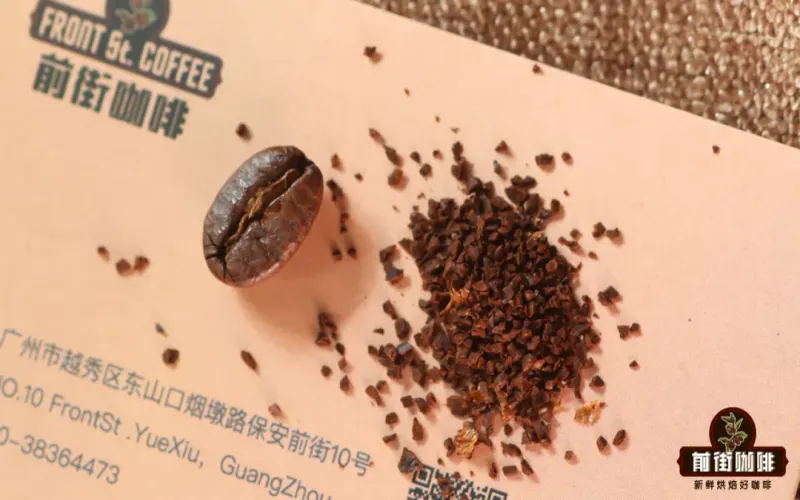
Pour Over, Cold Brew, Ice Drip, Moka Pot, and Espresso: Grind Size Selection for Each Extraction Method and Analysis of 20-Mesh Sieve Pass Rate
Grind size is one of the core parameters determining the success or failure of coffee extraction, but the coarseness of coffee grounds is difficult to describe with intuitive numerical values, so sieve passing rate has become a more precise way to communicate. In this article, Front Street will systematically sort out the suitable grind levels for pour-over, cold brew (cold immersion and ice drip), French press, clever cup, moka pot, and espresso machine, and provide specific passing rate references for the No. 20 Chinese standard sieve. Whether you are a beginner who has just started or a veteran player looking to calibrate your grind, you can find corresponding parameter suggestions here. The article also specifically explains the differences between medium-light roast and medium-dark roast pour-over, adjustment methods for iced pour-over, and the reason why cold brew grind is not finer-is-better, helping you avoid common pitfalls and brew a full-flavored good cup of coffee. [more…]